

A significant number of people experience pain at work. Studies in Estonia have found that the majority of office workers have experienced bothersome pain at work at least once within a six-month period. Pain is not limited to any particular type of work, and people engaged in physically demanding jobs also experience it frequently. Although workplaces and work equipment are becoming increasingly modern, the prevalence of work-related pain remains high. In Europe, these problems have been found to affect millions of workers and cost employers billions of euros. Considering that people spend approximately one-third of their day at work, employers have an important role in creating a healthy work environment, including a responsibility to help prevent work-related pain. Pain prevention, in turn, begins with awareness – and employers have a key role to play in this.
Work-Related Pain – An Invisible but Costly Problem
\Work-related pain refers to pain that is caused by work or interferes with an employee’s ability to perform their work tasks. Because pain is neither visible nor contagious, it is often treated as a personal problem – and employees may continue working with pain for as long as they are still able to carry out their duties somehow. Sick leave is often taken only when the pain becomes intolerable or begins to interfere even with simple everyday activities.
Many employees do not feel comfortable telling their manager or employer about their pain. Pain is a personal experience that can be difficult for others to understand. Employees may fear that their concerns will be dismissed, seen as “exaggeration,” or interpreted as a sign of weakness. Yet early recognition and intervention are crucial. If pain is ignored for too long and becomes chronic, the risk of an employee being absent from work for months or even years increases significantly.
For employers, this means sick leave, reduced productivity, and often the difficult task of arranging cover for absent employees. Research shows that investments in preventing work-related musculoskeletal disorders – including raising awareness and providing training – can deliver returns many times over. Healthier employees are more productive, more engaged, and able to remain in work for longer.

Preventing work-related pain requires a three-way collaboration
In recent years, many employers have made significant efforts to improve the work environment by investing in ergonomic equipment, creating opportunities for movement and rest, and even setting up exercise areas or gyms. These are commendable steps and an important part of creating a healthy workplace.
However, the most important factor is often overlooked – employee awareness. If employees do not understand why these problems develop or how they can be prevented, even the best equipment may go unused or be used incorrectly. Improving the physical work environment is only one part of preventing health problems among employees.
Pain prevention cannot rely on the employer’s efforts alone – it requires three-way collaboration:
- Tööandja roll on tagada ohutu ja tervist toetav töökeskkond, töökorraldus ja vahendid.
- Töötaja vastutus on kasutusele võetud lahendusi mõistlikult rakendada, järgida ohutusjuhiseid ning hoida enda tervist ka töövälisel ajal – sh uni, liikumine, taastumine.
- Tervishoiuspetsialisti ülesanne on toetada mõlemaid osapooli tõenduspõhiste teadmistega: anda selgitusi valude põhjustest, hinnata riske ning pakkuda koolitusi, konsultatsioone ning sekkumistegevusi, mis aitavad kujundada arusaama ja praktilisi oskusi valude ennetamiseks.
Effective occupational health is not just about ergonomic chairs or desks – it is about people with strong health literacy.
Poor-quality training can do more harm than good.
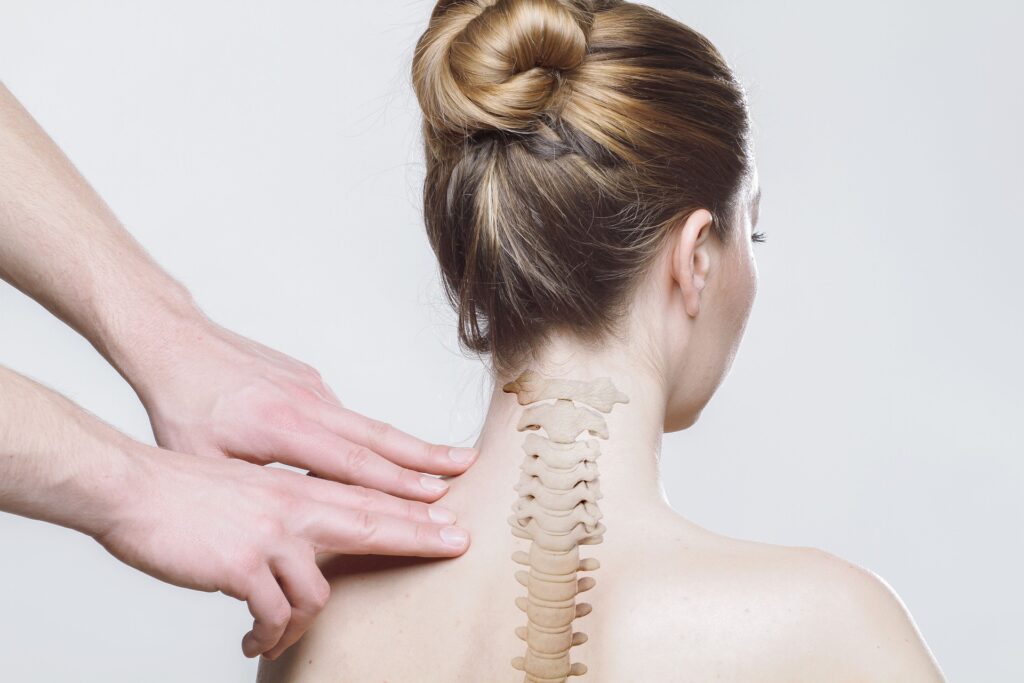
In occupational health, training and advice are still sometimes based on outdated concepts, incomplete knowledge, or oversimplified recommendations. A biomedical approach remains common, with work-related pain attributed primarily to structural “faults” such as posture, body alignment, or sitting position. At the same time, psychosocial and behavioural factors, which play an important role in the development of chronic pain, are often overlooked.
Recommendations given in poor-quality training or during counselling by a healthcare professional may sound logical, but their effects can be the opposite of what is intended. If an employee is told that their pain is caused by “poor posture” or “moving incorrectly,” this may create unnecessary anxiety, avoidance behaviour, or fear of movement. The result may be poorer health behaviour and the persistence or worsening of pain. In addition, the employee’s individual context and beliefs are often overlooked.
We often see trainers emphasising that, for example, office workers should perform specific exercises, when in reality the type of physical activity should be based on each employee’s individual needs and preferences. Generalised recommendations may fail to resonate with people or motivate them to make lasting changes.
Another concern is that many ergonomics training courses focus only on mechanically correcting working postures without addressing why pain develops in the first place, what the relevant risk factors are, or how employees themselves can contribute to prevention. Trainers also often lack a deeper understanding of modern pain science, leaving employees without important knowledge and insight. Employers should therefore carefully consider whose expertise and professional values they rely on when choosing training providers.
Good training does not just provide information – it changes the way people think.
The aim of Valuvares training is not to provide fixed lists of exercises or to lecture participants about maintaining the “correct” sitting posture. Instead, we focus on helping participants understand why pain develops, which factors influence it, and how each person can contribute to preventing and managing pain themselves – regardless of their profession or the nature of their work.
Through evidence-based knowledge, we help participants rethink deeply rooted beliefs about pain – for example, the belief that pain is always a sign of tissue damage or that movement will make the problem worse. Our aim is not to create fear, but to reduce anxiety, build confidence, and strengthen participants’ ability to manage and maintain their own health. Our extensive experience in healthcare also allows us to bring real-life examples from clinical practice into the training, helping participants understand complex topics and relate them to their everyday work.
New chairs, adjustable desks, or employee health benefits may reflect an employer’s good intentions and commitment to wellbeing, but lasting change only happens when employees change the way they think. That is exactly what we focus on in our training.
Want to make a real difference to employee wellbeing and reduce the impact of work-related pain? Start with the way people think.
Explore Valuvares training courses and request a quote.
References:
- European Agency for Safety and Health at Work. Musculoskeletal disorders. [https://osha.europa.eu/et/themes/musculoskeletal-disorders]
- Argus M. Musculoskeletal disorders in relation to work-related factors, physical activity, functional characteristics, and COVID-19 lockdown among office workers. Doctoral thesis. Tartu Ülikool, 2023. https://dspace.ut.ee/items/2447a200-dfa7-4b06-848a-9745aecb5434
- International Association for the Study of Pain. IASP Announces Revised Definition of Pain. 2020. https://www.iasp-pain.org/publications/iasp-news/iasp-announces-revised-definition-of-pain/
- Nicholson PJ.Occupational Health: The Value Proposition. The Society of Occupational Medicine. 2022. https://www.som.org.uk/sites/som.org.uk/files/Occupational_Health_The_Value_Proposition_March_2022.pdf
- European Pain Federation EFIC. What is the Bio-Psycho-Social Model of Pain? https://europeanpainfederation.eu/what-is-the-bio-psycho-social-model-of-pain/